Posted on August 25, 2026
Going to the orthodontist for the first time can feel like a big deal—especially for kids and teens. You may remember bad-tasting goo in your mouth for an impression, confusing conversations about braces, or disappointment and anxiety when the treatment lasted much longer than expected.
At Lustig & Young Orthodontics, we understand that a great consultation is about more than looking at teeth. It is an opportunity to listen, answer questions, explain what is happening, and help every patient feel comfortable about the next step.
If your child is nervous about an orthodontic consultation, here is what you need to know—and how advanced digital technology like the iTero scanner can make a meaningful difference.
For young patients, an orthodontic consultation may be their first experience with a specialist dental office. Even patients who are comfortable at regular dental visits may have concerns about the unknown.
Common questions and worries include:
These concerns are completely understandable. The American Association of Orthodontists explains that an initial visit is primarily a chance to discuss concerns, learn about the patient’s needs, receive an examination, and review personalized treatment recommendations. A consultation exam itself should not be uncomfortable.
For parents, the questions can be different but just as important. You may want to understand whether treatment is necessary, how long it may take, what options are available, what treatment will cost, and how orthodontic care will fit into an already busy family schedule.
One of young patients’ most common worries involves dental impressions.
Traditional impressions often require a tray filled with soft impression material to stay in the mouth while it sets. Some patients tolerate this process easily, but others—especially children and teens with a sensitive gag reflex—may struggle to get through this critical step.
Research comparing digital and conventional impressions in children and adolescents found that conventional alginate impressions involved greater discomfort, nausea, gagging, breathing concerns, jaw discomfort, and a longer perceived procedure time. The study concluded that digital impressions provided greater overall comfort for children and teens.
That does not mean every young patient will feel anxious or uncomfortable with traditional impressions. However, choosing a practice that offers a modern digital alternative can help remove one major concern from the orthodontic experience.
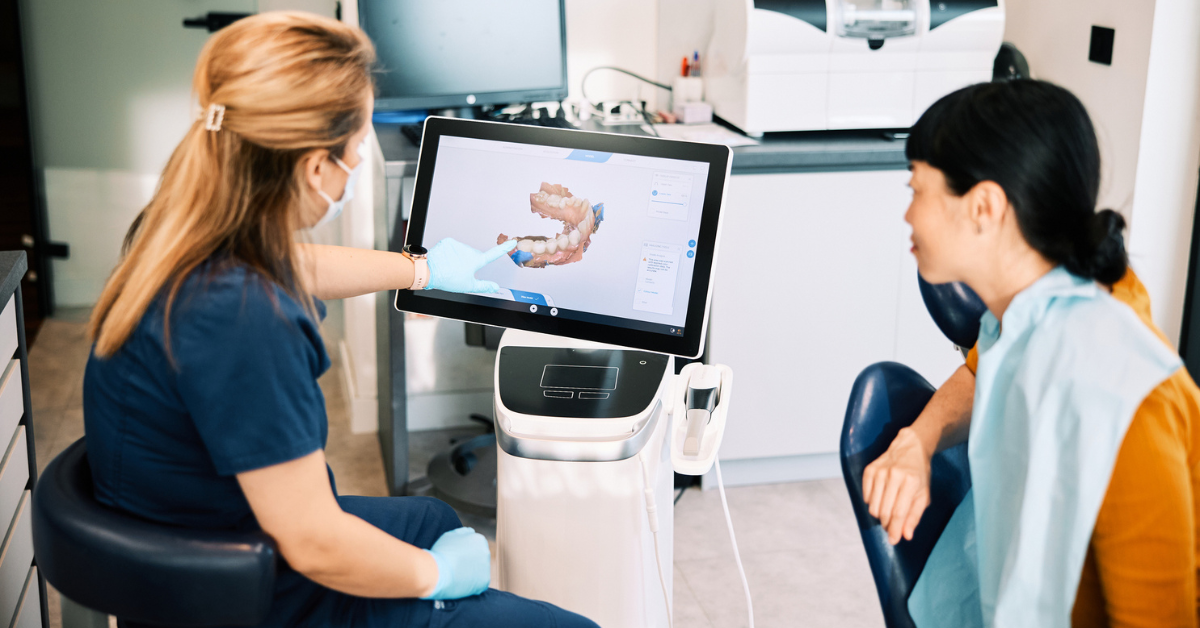
At Lustig & Young Orthodontics, we use the iTero scanner to create detailed digital images of a patient’s teeth and bite. Instead of using bulky trays and impression material, the scanner captures a 3D digital model using a small handheld wand.
For many children and teens, this can make the records appointment feel easier, cleaner, and more comfortable.
The iTero scanning process can help reduce the challenges of impressions:
Digital scanning does not eliminate every source of nervousness. But it can make a consultation less intimidating.
A consultation can be hard to understand when a patient only hears words such as “crowding,” “overbite,” “spacing,” or “crossbite.” Digital technology can make those conversations much clearer.
The iTero system creates a detailed 3D model of the teeth and bite. This helps the orthodontic team show patients and parents what they are seeing, explain why treatment may be recommended, and discuss potential goals in a more visual way.
iTero’s orthodontic tools are designed to support patient engagement through visualization features. These include models that help clinicians discuss oral-health findings, treatment plans, and progress during visits. The system can also provide simulations of potential treatment outcomes, helping patients compare possible orthodontic treatment paths.
For a young patient, being able to see their own smile on a screen can make the conversation more personal. Instead of feeling like treatment is something being decided for them, they can better understand what the orthodontist is recommending and why.
Clear communication matters at every age, but it is especially helpful when a child or teen is deciding whether they feel ready for orthodontic treatment.
At Lustig & Young Orthodontics, our team wants patients to ask questions. We take time to learn about their goals, daily routines, sports, musical instruments, and lifestyle so we can recommend a treatment plan that fits their life—not just their teeth.
Digital scans can support that conversation by giving families a clear visual starting point. During a consultation, we can discuss questions such as:
The American Association of Orthodontists recommends that children have their first orthodontic evaluation no later than age 7. That does not mean every child needs
treatment at that age. Often, an orthodontist will recommend observation and periodic visits while permanent teeth and jaws continue to develop.
Digital orthodontic records are not only about patient comfort. They can also support efficient, detailed treatment planning.
According to iTero, digital workflows can improve treatment planning, accuracy, and treatment monitoring. Features such as digital scanning, integration with Invisalign treatment planning, and progress-assessment tools are intended to help orthodontic teams track treatment and make decisions with greater predictability.
For patients considering Invisalign treatment, digital scans can connect directly to the Invisalign Doctor Site and ClinCheck treatment-planning workflow. iTero tools also allow treatment simulations to account for factors such as spaces, missing teeth, extractions, and teeth that should not be moved.
Every orthodontic case is unique, and no scanner replaces the knowledge and judgment of an orthodontic specialist. The technology is a powerful tool—but the treatment plan still depends on a thorough evaluation, the patient’s oral health, facial growth, bite, goals, and the orthodontist’s expertise.
At Lustig & Young Orthodontics, your consultation is designed to be welcoming, informative, and pressure-free.
Here is what your visit may include:
We want to hear what you or your child hopes to improve. Whether the concern is crowded teeth, gaps, an overbite, a tooth that is not coming in correctly, or simply wanting a more confident smile, we start by listening.
One of our orthodontic specialists will examine the teeth, jaws, and bite. Depending on the patient’s needs, the evaluation may include photographs, digital scanning, and X-rays to help us see both the visible teeth and what is developing below the gums.
We will explain what we find in easy-to-understand terms. If treatment is needed, we will discuss the options, expected goals, timing, and what treatment may look like. If it is not time for treatment yet, we can recommend an observation plan.
Great orthodontic care should work for real families. We will review treatment costs, insurance benefits, and payment options so there are no surprises. Lustig & Young Orthodontics offers low down payment options, zero financing options, and extended payment plans.
An orthodontic consultation does not have to feel scary, confusing, or overly clinical. With a friendly team, clear communication, and technology designed to make records more comfortable and visual, young patients can feel more involved and more confident about their care.
At Lustig & Young Orthodontics, we use modern tools like the iTero scanner because we believe patients deserve an experience that is as comfortable, informative, and personalized as possible.
If your child is ready for an orthodontic evaluation—or if you are simply wondering whether now is the right time—Lustig & Young Orthodontics is here to help.
Our orthodontic specialists provide personalized care for children, teens, and adults throughout Keller, Haslet, Saginaw, and Azle, Texas. We will get to know your goals, answer your questions, explain your options, and create a plan that works for your smile, lifestyle, and budget.
Contact Lustig & Young Orthodontics today to schedule your free consultation and see how a more comfortable, digital-first orthodontic experience can help your family get started.